What is an Emergency Funds? Why they are Important
Published: 3 Aug 2026
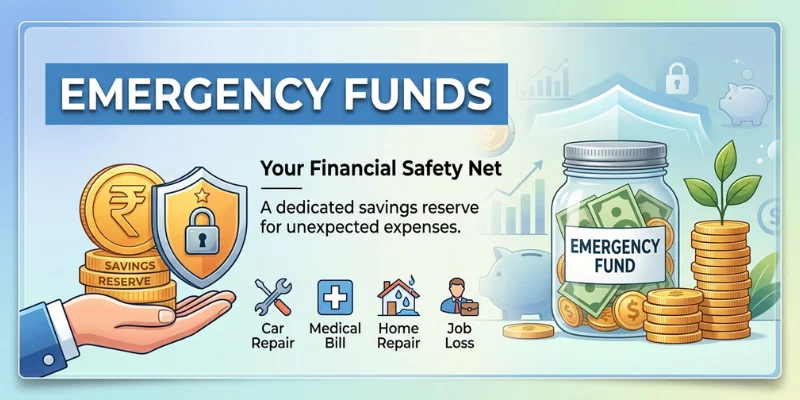
An Emergency Fund is money saved for sudden and unexpected expenses. It can help during job loss, medical needs, urgent repairs, or income delays. This money should remain safe, separate, and easy to access. Many people aim to save enough to cover several months of essential expenses. A strong Emergency Fund can reduce the need for loans and credit cards.
1. What Is an Emergency Fund?
An Emergency Fund is money saved only for sudden and necessary expenses. It can help during job loss, medical treatment, urgent travel, or major home repairs. This money should stay separate from your regular savings and remain easy to access. For example, if Ali’s essential monthly expenses are ₹30,000, he may aim to save ₹1,80,000 for six months. If he loses his job, this amount can help him manage rent, food, bills, and loan payments. An Emergency Fund reduces the need to use credit cards or take costly loans.
2. Why Is an Emergency Fund Important?
An Emergency Fund provides financial support when an unexpected problem affects your income or expenses. It helps you handle difficult situations without disturbing your regular budget, taking costly loans, or selling long-term investments.
1. Provides Financial Security
An Emergency Fund gives you support during sudden money problems. It helps you manage essential expenses without panic. This creates a stronger financial safety net.
2. Reduces the Need for Loans
Unexpected costs may force people to use credit cards or personal loans. Emergency savings can help you avoid high interest and extra debt. This keeps your monthly budget under control.
3. Helps During Job Loss
A job loss can stop regular income for some time. An Emergency Fund can cover rent, food, bills, and other basic needs. It gives you time to search for new work without immediate financial pressure.
4. Covers Medical Emergencies
Health insurance may not cover every medical expense. Emergency savings can pay for medicines, tests, travel, or other urgent costs. This helps you get treatment without delay.
5. Protects Long-Term Investments
Without emergency savings, you may need to sell shares or mutual funds during a market fall. This can lead to losses and disturb your future plans. An Emergency Fund helps protect your long-term investments.
6. Reduces Financial Stress
Money problems can create fear and worry. Knowing that you have emergency savings can improve confidence and peace of mind. It also helps you make calmer financial decisions.
7. Supports Your Family
A sudden family emergency may require travel, treatment, or other urgent spending. An Emergency Fund can help you support your loved ones quickly. It provides financial protection when your family needs it most.
3. Who Needs an Emergency Fund?
An Emergency Fund is useful for almost everyone because unexpected expenses can affect any person. However, some people need a stronger financial backup because their income or responsibilities may be less stable.
1. Salaried Employees
Salaried people may face job loss, salary delays, or sudden medical costs. An Emergency Fund can help cover rent, food, bills, and loan payments until regular income returns. It gives extra security during uncertain periods.
2. Self-Employed People
Business owners and freelancers may not earn the same amount every month. Their income can change because of low sales, delayed payments, or seasonal work. A larger Emergency Fund can help them manage basic expenses during slow months.
3. Single-Income Families
Families that depend on only one income source may face greater risk. If the earning member loses a job or becomes unable to work, household expenses can become difficult to manage. Emergency savings can provide support until the situation improves.
4. People with Dependants
People who support children, parents, or other family members often have higher financial responsibilities. They may need money for school fees, healthcare, food, and daily needs. An Emergency Fund helps protect the whole family during difficult times.
5. People with Loans
Loan payments usually continue even when income stops. People with home loans, car loans, or other debts should keep emergency savings for monthly instalments. This can help them avoid late fees and repayment problems.
6. Retired People
Retired people may have limited or fixed income. Unexpected medical, home, or family expenses can put pressure on their budget. An Emergency Fund can provide quick access to money without disturbing retirement investments.
7. Students and Young Earners
Students and young earners may need money for urgent travel, medical needs, or sudden education costs. Even a small emergency reserve can reduce dependence on parents, friends, or credit cards. Starting early also builds a strong saving habit.
4. How Much Emergency Fund Should You Have?
The right Emergency Fund amount depends on your monthly expenses, income stability, family responsibilities, and loan payments. Many people aim to save enough to cover three to six months of essential expenses, but the exact amount can be different for every person.
1. Three Months of Expenses
A three-month fund may suit people with a stable job, regular income, and fewer financial responsibilities. For example, if your essential monthly expenses are ₹30,000, your target may be ₹90,000. This amount can provide basic support during a short financial problem.
2. Six Months of Expenses
A six-month fund may offer stronger protection for families, people with loans, or those who have dependants. If your essential expenses are ₹30,000 per month, your target may be ₹1,80,000. This gives you more time to manage job loss, medical costs, or income delays.
3. When You May Need a Larger Fund
You may need nine to twelve months of expenses if your income is irregular or your financial responsibilities are high. This may apply to freelancers, business owners, single-income families, or people with ongoing medical needs. A larger reserve can provide extra security during long periods without regular income.
4. Start with a Smaller Target
You do not need to build the full amount immediately. Beginners can first save one month of essential expenses and then increase it gradually. A smaller Emergency Fund is still better than having no financial backup.
5. Include Only Essential Expenses
Calculate expenses such as rent, food, utility bills, medicines, insurance, school fees, transport, and minimum loan payments. Do not include luxury shopping, holidays, dining out, or entertainment. This keeps your target realistic and easier to achieve.
6. Simple Calculation Example
Suppose your essential monthly expenses are ₹40,000. A three-month fund would be ₹1,20,000, while a six-month fund would be ₹2,40,000. Choose the amount according to your income stability and family needs.
5. How to Calculate an Emergency Fund
Calculating an Emergency Fund is simple when you know your essential monthly expenses. You need to list important costs, remove unnecessary spending, choose the number of months, and then calculate the final amount.
1. List Your Essential Monthly Expenses
Write down all necessary expenses that you must pay every month. These may include rent, food, electricity, transport, medicines, insurance, school fees, and loan payments. Use your recent bank statements or bills for a more accurate amount.
2. Remove Non-Essential Spending
Do not include expenses such as shopping, vacations, dining out, entertainment, or luxury subscriptions. These costs can usually be reduced during a financial emergency. Focus only on basic needs.
3. Add All Essential Expenses
Calculate the total amount you need for one month. For example, if rent is ₹15,000, food is ₹8,000, bills are ₹4,000, and other needs are ₹3,000, your monthly total is ₹30,000.
4. Choose the Number of Months
Select how many months of expenses you want to cover. A stable salaried person may choose three to six months, while a freelancer or single-income family may choose six to twelve months. Your choice should depend on income stability and family responsibilities.
5. Use the Emergency Fund Formula
Use this simple formula:
Monthly essential expenses × Number of months = Emergency Fund target
For example:
₹30,000 × 6 months = ₹1,80,000
6. Review the Amount Regularly
Your expenses may increase because of inflation, rent changes, medical needs, or new family responsibilities. Review the target once or twice a year. Increase the amount when your essential monthly costs rise.
6. Starter Emergency Fund vs Full Emergency Fund
A starter Emergency Fund is a small amount saved for basic and sudden expenses. It may cover one month of essential costs or a fixed amount that is easy to achieve. This fund gives beginners quick financial protection while they work toward a larger target. It can help with minor medical bills, urgent repairs, or short income delays. Starting small also makes the saving goal feel less difficult.
A full Emergency Fund usually covers three to six months of essential expenses. People with irregular income, loans, or family responsibilities may need an even larger amount. This fund provides stronger protection during job loss, major medical needs, or long periods without income. It should remain safe, separate, and easy to access. Building it step by step helps create long-term financial security.
7. How to Build an Emergency Fund
Building an Emergency Fund takes time, but a simple and regular plan can make it easier. Start with a clear target, save a fixed amount every month, and keep the money separate from your regular spending.
1. Set a Clear Target
First, decide how much money you need. You may begin with one month of essential expenses and later increase it to three or six months. A clear target makes the goal easier to follow.
2. Start with a Small Amount
You do not need to save a large amount at once. Begin with an amount that fits your monthly budget. Even small savings can grow into a useful financial backup over time.
3. Open a Separate Account
Keep your emergency savings away from your regular spending account. A separate account reduces the chance of using the money for shopping or other planned expenses. It also makes progress easier to track.
4. Automate Your Savings
Set an automatic bank transfer after receiving your salary or income. This helps you save before spending the money. Regular automation also builds a strong saving habit.
5. Reduce Unnecessary Expenses
Review spending on subscriptions, dining out, shopping, and entertainment. Cut or reduce expenses that are not essential. Add the saved amount to your Emergency Fund.
6. Use Bonuses and Extra Income
Add bonuses, gifts, tax refunds, freelance income, or incentives to the fund. Extra income can help you reach the target faster. Avoid spending the full amount on lifestyle purchases.
7. Increase Savings Gradually
Raise your monthly contribution when your salary or business income grows. You can also increase it after paying off a loan or reducing another expense. Small increases can make a big difference over time.
8. Refill the Fund After Using It
Use the money only for a genuine emergency. After the situation becomes stable, start rebuilding the amount as soon as possible. Treat refilling it as an important financial priority.
9. Review the Target Regularly
Check the fund once or twice a year. Increase the target if rent, food, healthcare, loan payments, or family responsibilities rise. This keeps your emergency savings suitable for your current needs.
8. When Should You Use an Emergency Fund?
An Emergency Fund should only be used for sudden, necessary, and urgent expenses. Before withdrawing money, ask yourself whether the cost is unexpected, important, and difficult to delay.
1. Job Loss
You can use the fund when your regular income stops because of job loss. It can help cover rent, food, utility bills, loan payments, and other basic needs. This gives you time to find new work without taking costly debt.
2. Medical Emergency
Emergency savings can help pay for urgent treatment, medicines, tests, or hospital costs. It may also cover expenses that health insurance does not pay. This allows you to arrange treatment without delay.
3. Urgent Home Repairs
You may use the money for serious home problems such as water leakage, electrical damage, or broken essential equipment. These repairs cannot always wait because they may affect safety or daily life. Avoid using the fund for planned decoration or renovation.
4. Vehicle Breakdown
The fund may help when your vehicle suddenly needs an important repair. This is especially useful if you depend on it for work, study, or daily travel. It should not be used for upgrades or optional accessories.
5. Family Emergency
A sudden family problem may require urgent travel, treatment, or financial support. Emergency savings can help you respond quickly. Use the money only when the need is serious and unavoidable.
6. Income Delay
Freelancers, business owners, and salaried people may sometimes receive income late. The fund can cover essential expenses until payment arrives. This prevents missed bills and unnecessary borrowing.
7. Essential Replacement
You may use the fund when an important item suddenly stops working, such as a refrigerator, water pump, or work laptop. The item should be necessary for daily life or income. Planned upgrades should come from regular savings.
8. Unexpected Legal or Travel Need
Urgent legal fees or emergency travel may require immediate money. The fund can help when the expense is necessary and cannot be delayed. Check whether another source, such as insurance or employer support, is available first.
9. When Should You Not Use an Emergency Fund?
An Emergency Fund should not be used for planned, optional, or luxury expenses. Before withdrawing money, ask whether the expense is truly unexpected, necessary, and urgent.
1. Shopping and Luxury Purchases
Do not use emergency savings for clothes, jewellery, gadgets, or expensive accessories. These are usually planned or optional expenses. Save for them separately.
2. Vacations and Entertainment
Holidays, parties, movies, and dining out are not financial emergencies. Using the fund for these activities can leave you unprotected during a real crisis. Create a separate travel or entertainment budget.
3. Festivals and Gifts
Festival shopping, celebrations, and gifts should come from planned savings. These expenses usually happen at expected times. Add them to your yearly budget instead of using emergency money.
4. Planned Home Renovation
Do not use the fund for painting, new furniture, decoration, or other planned upgrades. These costs can usually be delayed. Only urgent repairs that affect safety or daily life may qualify.
5. Vehicle Upgrades
New accessories, better seats, music systems, or cosmetic repairs are not emergencies. Save separately for these improvements. Use emergency money only for essential repairs needed for work or travel.
6. Investment Opportunities
Do not use your Emergency Fund to buy shares, mutual funds, property, or other investments. Investment values can fall, and the money may not remain easy to access. Emergency savings should focus on safety and liquidity.
7. Regular Monthly Bills
Rent, groceries, electricity, and loan payments should normally come from your monthly budget. The fund should only cover these costs when income suddenly stops or is delayed. Poor budgeting alone is not an emergency.
8. Paying for Non-Urgent Debt
Do not empty the fund to repay low-interest debt early. This may leave you without protection during a sudden problem. Keep emergency savings separate while following a regular debt repayment plan.
9. Lending Money for Non-Emergency Needs
Avoid giving your Emergency Fund to friends or relatives for optional expenses. You may not receive the money back when you need it. Help only when the situation is genuinely urgent and your own safety remains protected.
10. Common Emergency Fund Mistakes
Avoiding these common mistakes can help keep your Emergency Fund safe and useful.
- Not building an Emergency Fund at all.
- Saving too little for major expenses.
- Using it for shopping or travel.
- Mixing it with regular savings.
- Investing it in risky assets.
- Forgetting to refill it after use.
- Not increasing it when expenses rise.
Review your fund once or twice a year. Check it sooner after marriage, a new child, job change, or higher monthly expenses. Increase the target when your essential costs rise.
Yes, you can first create a small starter reserve while making regular debt payments. After building basic protection, focus more strongly on high-interest debt. Continue growing the reserve gradually as your budget improves.
Couples can keep one shared fund for household expenses and smaller personal reserves if needed. The target should consider both incomes, dependants, debts, and job stability. Single-income couples may need a larger financial backup.
Yes, you may continue small long-term investments if your budget allows. However, basic emergency savings should receive priority before taking major investment risks. Avoid investing money that may be needed suddenly.
Start regular contributions again when your financial situation becomes stable. Reduce optional spending temporarily and add bonuses or extra income to the fund. Treat rebuilding it as an important financial priority.
Conclusion
So guys, in this article, we’ve covered Emergency Fund in detail. We discussed its meaning, importance, ideal amount, calculation method, uses, and common mistakes. In my opinion, everyone should start with at least one month of essential expenses and gradually build a larger fund. Keep this money safe, separate, and easy to access. Calculate your monthly expenses today and start building your Emergency Fund now.
The information and calculators on Finance Calculatorz are provided for educational purposes only. Calculator results are estimates and may not always be fully accurate. This content is not financial, investment, tax, or legal advice. Please consult a qualified professional before making any financial decision.

- Be Respectful
- Stay Relevant
- Stay Positive
- True Feedback
- Encourage Discussion
- Avoid Spamming
- No Fake News
- Don't Copy-Paste
- No Personal Attacks
- Be Respectful
- Stay Relevant
- Stay Positive
- True Feedback
- Encourage Discussion
- Avoid Spamming
- No Fake News
- Don't Copy-Paste
- No Personal Attacks
