What is Asset Allocation? Importance and its Types
Published: 5 Aug 2026
Are you confused about how much money you should invest in shares, bonds, gold, or cash? Many beginners do not know which mix is suitable for their goals. Investing too much in one place can increase risk, while keeping too much in safe options may reduce growth. Asset Allocation helps create a better balance between safety and returns. A simple plan can make investment decisions easier.
1. What Is Asset Allocation?
Asset Allocation means dividing your investment money among different asset classes such as equity, debt, gold, and cash. Its main purpose is to balance risk, return, and liquidity. For example, suppose Ali has ₹1,00,000 to invest. He may put ₹50,000 in equity mutual funds, ₹30,000 in bonds or fixed-income options, ₹10,000 in gold, and ₹10,000 in cash. If one asset performs poorly, another may provide stability. This approach reduces dependence on a single investment. A proper mix can make the portfolio more balanced and suitable for long-term goals.
2. Why Is Asset Allocation Important?
Asset Allocation is important because every investment reacts differently to market changes. Equity may offer strong growth, while debt can provide more stability. Gold may support diversification, and cash gives quick access when needed. Dividing money across these assets can reduce dependence on one option. It also helps create a better balance between risk and return. This makes the overall portfolio more stable and easier to manage.
A proper mix also helps investors match their money with different financial goals. Short-term goals may need more debt and cash, while long-term goals may allow more equity. Suitable Asset Funds can support growth, safety, and liquidity at the same time. A planned allocation can also reduce emotional buying and selling during market changes. It helps investors stay focused on their strategy instead of reacting to fear. In this way, the portfolio becomes more practical and goal-based.
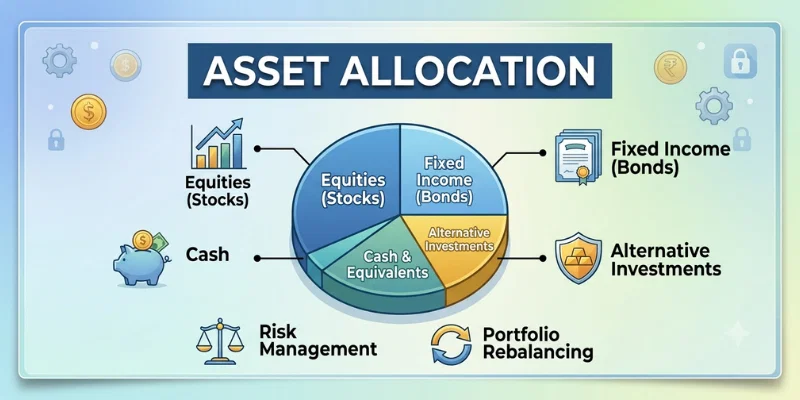
3. Main Asset Classes
Main asset classes are broad groups of investments that behave differently in the market. Each class has its own level of risk, return, liquidity, and growth potential. Understanding them is important for building a balanced portfolio through proper Asset Allocation.
1. Equity
Equity represents ownership in a company. Investors can gain equity exposure through shares, equity mutual funds, index funds, or ETFs. It usually offers higher long-term growth potential, but prices can rise and fall sharply in the short term. Equity may suit investors with long-term goals and higher risk tolerance. It can help build wealth, but returns are not fixed or guaranteed.
2. Debt
Debt investments involve lending money to a government, bank, company, or other institution. Common examples include bonds, fixed deposits, government securities, and debt mutual funds. These options usually offer more stable returns than equity. They may suit short- and medium-term goals or investors who prefer lower risk. However, returns may be affected by interest rates, inflation, and the issuer’s ability to repay.
3. Gold
Gold is often used to protect wealth and diversify a portfolio. Investors can choose physical gold, gold ETFs, gold mutual funds, or digital gold. Gold may perform differently from equity and debt during uncertain market conditions. It does not usually provide regular interest or dividends. Its price can also rise or fall, so it should normally remain only one part of the portfolio.
4. Real Estate
Real estate includes land, houses, apartments, shops, and commercial property. Investors may earn through rental income or an increase in property value. It can provide a physical asset and long-term growth potential. However, it usually needs a large starting amount and may take time to sell. Maintenance, legal checks, taxes, and registration charges can also increase the total cost.
5. Cash and Cash Equivalents
Cash and cash equivalents are low-risk options that provide quick access to money. They include savings accounts, short-term deposits, liquid funds, and overnight funds. These assets are useful for emergencies and short-term expenses. Their returns are usually lower than equity or long-term investments. Keeping too much money in cash may also reduce its value over time because of inflation.
A balanced mix of these asset classes can help investors manage risk, growth, income, and liquidity. The right combination of investments or Asset Funds should match the investor’s goals, time period, and comfort with market changes.
4. Types of Asset Allocation
There are different types of Asset Allocation strategies, and each one follows a different method of dividing money among equity, debt, gold, cash, and other assets. The right approach depends on your goals, risk level, investment period, and market knowledge.
1. Strategic Asset Allocation
Strategic allocation follows a fixed long-term investment mix. For example, an investor may keep 60% in equity, 30% in debt, and 10% in gold. The portfolio is reviewed and rebalanced when the percentages move away from the target.
2. Tactical Asset Allocation
Tactical allocation allows temporary changes based on market conditions. An investor may increase equity when markets look attractive or add more debt during uncertain periods. This approach needs more knowledge and can carry higher risk.
3. Dynamic Asset Allocation
Dynamic allocation changes the investment mix regularly according to market movement, valuation, or risk level. Some hybrid funds use this strategy automatically. It may help control risk, but returns are still not guaranteed.
4. Age-Based Asset Allocation
This method adjusts the portfolio according to the investor’s age. Younger investors may keep more money in equity because they have a longer time period. Older investors may prefer more debt and cash for stability.
5. Goal-Based Asset Allocation
Goal-based allocation creates a separate investment mix for each financial goal. For example, an emergency fund may stay in cash, while retirement money may include more equity. This makes the portfolio more practical and focused.
6. Constant-Weighting Asset Allocation
This strategy maintains fixed percentages in each asset class. When one asset grows above its target, the investor sells part of it and adds money to weaker assets. This keeps the portfolio close to the original plan.
7. Insured Asset Allocation
Insured allocation sets a minimum portfolio value that the investor wants to protect. When the portfolio performs well, more money may stay in growth assets. When its value falls near the protected level, money is moved toward safer options.
5. Factors That Affect Asset Allocation
The right Asset Allocation is different for every investor. It depends on personal goals, financial condition, time period, and comfort with market risk. Understanding these factors can help you create a practical and balanced portfolio.
1. Age
Age can affect how much investment risk a person can take. Younger investors usually have more time to recover from market falls, so they may keep a higher amount in equity. Older investors may prefer more debt, cash, and stable Asset Funds.
2. Financial Goals
Every financial goal needs a different investment mix. Short-term goals usually require safer and more liquid assets, while long-term goals may allow more equity. The allocation should match the purpose and deadline of the goal.
3. Investment Time Period
The time available before you need the money is very important. A longer period may allow you to accept greater market changes. Money needed soon should generally remain in low-risk and easy-to-access options.
4. Risk Tolerance
Risk tolerance means how comfortable you are when investment values rise or fall. Some investors can handle large market changes, while others prefer stable returns. Your portfolio should match your real comfort level.
5. Income Stability
People with regular and stable income may be able to take more long-term investment risk. Freelancers, business owners, or people with uncertain income may need more cash and debt. Income stability affects both risk capacity and liquidity needs.
6. Family Responsibilities
Children, elderly parents, medical needs, and household expenses can affect investment decisions. Higher responsibilities may require a safer and more liquid portfolio. Investors should protect essential family needs before taking high risk.
7. Emergency Fund
A strong emergency reserve helps investors keep long-term investments untouched during financial problems. Without it, they may need to sell assets at the wrong time. Emergency savings should remain separate from Asset Allocation for long-term goals.
8. Liquidity Needs
Liquidity means how quickly an investment can be converted into cash. People who may need money soon should keep a larger portion in liquid assets. Long lock-in products may not suit near-term needs.
9. Inflation
Inflation reduces the purchasing power of money over time. A portfolio with only low-return assets may not grow enough for long-term goals. Growth-focused assets can help protect future value, although they may carry more risk.
10. Tax and Investment Costs
Taxes, fund charges, brokerage, and withdrawal penalties can reduce final returns. Investors should compare the after-tax return of different assets. The best allocation should consider both performance and total cost.
6. Asset Allocation by Age
Age can help investors decide how much money to keep in growth, income, and low-risk assets. However, Asset Allocation should also consider income, financial goals, family responsibilities, and risk tolerance.
1. Investors in Their 20s
People in their 20s usually have a long investment period and more time to recover from market falls. They may keep a larger portion in equity and a smaller portion in debt, gold, and cash. However, they should first build an emergency fund and avoid taking more risk than they can handle.
2. Investors in Their 30s
Investors in their 30s may have goals such as buying a home, raising children, or planning education. They may use a balanced mix of equity, debt, gold, and liquid assets. Suitable Asset Funds can help them manage both long-term growth and medium-term responsibilities.
3. Investors in Their 40s
People in their 40s often focus more on retirement, children’s education, and loan repayment. They may gradually reduce very high equity exposure and increase debt or stable assets. Regular portfolio reviews become more important as major goals move closer.
4. Investors in Their 50s
Investors in their 50s usually have less time before retirement. They may prefer greater capital protection, regular income, and lower market risk. A larger portion in debt, fixed-income options, and cash may be suitable, while some equity can still support long-term growth.
5. Investors in Their 60s and Above
People in their 60s and above may focus on retirement income, healthcare, and easy access to money. Their portfolio may include more debt, cash, and low-risk investments, with limited equity exposure. The main aim is usually stability, liquidity, and protection from large losses.
7. What Is Portfolio Rebalancing?
Portfolio rebalancing means adjusting your investments to bring them back to your planned Asset Allocation. Market movements can change the value of equity, debt, gold, and other assets, so their percentages may move away from the original target.
1. Simple Meaning
Suppose your target is 60% equity, 30% debt, and 10% gold. After a strong market rise, equity may increase to 70% of the portfolio. Rebalancing means reducing the extra equity or adding more money to debt and gold.
2. Why Rebalancing Is Important
Rebalancing helps maintain your chosen risk level. Without it, one asset may become too large and make the portfolio riskier. It also keeps your investments connected to your original financial plan.
3. How Rebalancing Works
You can sell part of an asset that has grown above its target and invest the money in an underweight asset. Another method is to direct new investments toward the asset that has fallen below its target. This may reduce unnecessary selling and related costs.
4. When Should You Rebalance?
Many investors review their portfolio once or twice a year. You may also rebalance when an asset moves beyond a fixed limit, such as 5% from its target. Major changes in goals, income, or risk tolerance may also require a new allocation.
5. Costs and Tax Impact
Selling investments may create taxes, brokerage, exit loads, or other charges. Check these costs before making changes. Using new contributions to restore the balance may be more cost-effective.
8. How to Create an Asset Allocation Plan
Creating an Asset Allocation plan helps you divide money according to your goals, risk level, and investment period. A simple plan can make your portfolio easier to manage and reduce the chance of taking unnecessary risk.
1. Set Clear Financial Goals
First, decide what you are investing for. Your goal may be retirement, children’s education, a home purchase, or wealth creation. Add a target amount and deadline to make the goal clear.
2. Check Your Risk Tolerance
Think about how much market movement you can accept. Some investors remain calm during market falls, while others prefer stable returns. Your allocation should match your real comfort level.
3. Decide the Investment Period
Short-term goals usually need safer and more liquid assets. Long-term goals may allow a higher equity portion. The longer the time period, the more time you may have to recover from market changes.
4. Build an Emergency Fund
Keep emergency savings separate from long-term investments. This money should remain safe and easy to access. A proper emergency reserve can prevent you from selling investments during a difficult time.
5. Choose Suitable Asset Classes
Select asset classes such as equity, debt, gold, real estate, and cash. Each one serves a different purpose in the portfolio. Use only those assets that you understand and that match your financial needs.
6. Decide the Percentage for Each Asset
Set a target percentage for every asset class. For example, a moderate investor may choose 50% equity, 35% debt, 10% gold, and 5% cash. These percentages are only examples and should be adjusted according to personal needs.
7. Select Suitable Investments
After deciding the asset mix, choose suitable products within each class. These may include mutual funds, bonds, fixed deposits, ETFs, or other Asset Funds. Compare risk, charges, liquidity, and tax before investing.
8. Start Investing Regularly
You do not need to invest the full amount at once. Regular investing can make the process easier and more disciplined. Monthly contributions may also help you stay consistent during market changes.
9. Track the Portfolio
Review the value of each asset and compare it with the planned percentage. Check whether your investments are moving toward the goal. Avoid making changes only because of short-term market news.
10. Rebalance When Needed
If one asset becomes too large or too small, bring the portfolio back to the target mix. You can do this by adding new money to weaker assets or reducing the overweight portion. Consider tax and transaction costs before selling.
11. Update the Plan After Life Changes
Marriage, a new child, job change, higher income, or retirement can affect your financial needs. Review the plan after major life events. A good Asset Allocation plan should change when your goals or risk level change.
9. Common Asset Allocation Mistakes
Small mistakes can make an Asset Allocation plan too risky or less effective. Avoid these common problems while building and managing your portfolio.
- Putting all your money into one asset class.
- Copying another investor’s portfolio without checking your goals.
- Ignoring your investment period and liquidity needs.
- Taking too much equity risk for short-term goals.
- Chasing recent returns and changing the plan frequently.
- Forgetting to rebalance the portfolio regularly.
- Ignoring taxes, charges, and withdrawal penalties.
10. Tips for Better Asset Allocation
A simple and disciplined approach can make your portfolio easier to manage. Follow these tips to keep your investments balanced and goal-focused.
- Set clear financial goals before choosing the asset mix.
- Match each asset class with your risk level and time period.
- Keep emergency savings separate from long-term investments.
- Diversify across equity, debt, gold, and cash where suitable.
- Start with a simple plan that you can understand.
- Review your Asset Funds and other investments once or twice a year.
- Rebalance when the portfolio moves away from the planned percentages.
No, every goal may need a different investment mix. Short-term goals usually need safer assets, while long-term goals may allow more equity. Create a separate plan for each major goal.
You can review your portfolio once or twice a year. Check it sooner after a major change in income, family needs, or financial goals. Avoid making changes because of short-term market news.
Beginners do not need to use every asset class at once. They can start with a simple mix of equity, debt, and cash. Other assets can be added later when they understand them better.
You may need to rebalance the portfolio. This means reducing the overweight asset or adding more money to other assets. Check taxes and charges before selling investments.
No, Asset Allocation cannot remove every investment risk. It helps reduce dependence on one asset and may make the portfolio more balanced. Market-linked investments can still rise or fall.
Conclusion
So guys, in this article, we’ve covered Asset Allocation in detail. We discussed its meaning, importance, main asset classes, allocation types, age-based planning, portfolio rebalancing, and common mistakes. In my opinion, beginners should start with a simple mix of equity, debt, gold, and cash based on their goals and risk comfort. They should also review the portfolio once or twice a year instead of changing it frequently. Check your current investments today and create a balanced allocation plan for your future goals.
The information and calculators on Finance Calculatorz are provided for educational purposes only. Calculator results are estimates and may not always be fully accurate. This content is not financial, investment, tax, or legal advice. Please consult a qualified professional before making any financial decision.



- Be Respectful
- Stay Relevant
- Stay Positive
- True Feedback
- Encourage Discussion
- Avoid Spamming
- No Fake News
- Don't Copy-Paste
- No Personal Attacks
- Be Respectful
- Stay Relevant
- Stay Positive
- True Feedback
- Encourage Discussion
- Avoid Spamming
- No Fake News
- Don't Copy-Paste
- No Personal Attacks
