Best Mutual Funds for Beginners in 2026
Published: 23 Jun 2026
Many people want to start investing but do not know where to begin. Mutual funds are one of the easiest ways to enter the market. They allow you to invest small amounts and still get good exposure. That is why many experts suggest the best mutual funds for beginners as a starting point. They are simple, flexible, and easy to manage. Even without deep knowledge, you can begin your journey with confidence.
1. What are Mutual Funds?
Mutual funds are a simple way to invest your money without doing everything on your own. In this method, many people invest their money together in one place. This combined money is then used to invest in different options like stocks, bonds, or other assets. A professional expert, called a fund manager, handles these investments for you. This means you do not need deep market knowledge to get started. It makes investing easier for beginners who feel confused or unsure.
A beginner mutual fund spreads your money across different investments. This helps reduce risk because your money is not placed in one single option. For example, instead of buying one company’s stock, your money is divided into many companies. This creates a balanced approach and makes it safer than investing alone. Many people consider this as one of the best mutual funds for beginners because it is simple and easy to manage. It allows you to start small and grow your money step by step without stress.
2. Why Mutual Funds are Good for Beginners
Mutual funds are a good choice for beginners because they are simple and easy to start. You do not need a large amount of money to invest. You can begin with a small amount and increase it later. Another benefit is diversification. This means your money is spread across different investments, which helps reduce risk. You also do not need to track the market daily because a professional manages your investment. This makes the process stress-free for new investors. Many people choose the best mutual funds for beginners because they offer a balanced way to start.
Another reason is that these funds are flexible and easy to manage. You can invest regularly or make a one-time investment based on your comfort. A beginner mutual fund helps you learn how investing works without taking high risk. Many options are available, including low risk and low cost mutual fund choices. This allows you to choose based on your goal and comfort level. So instead of waiting or feeling confused, you can start small and build your confidence over time.
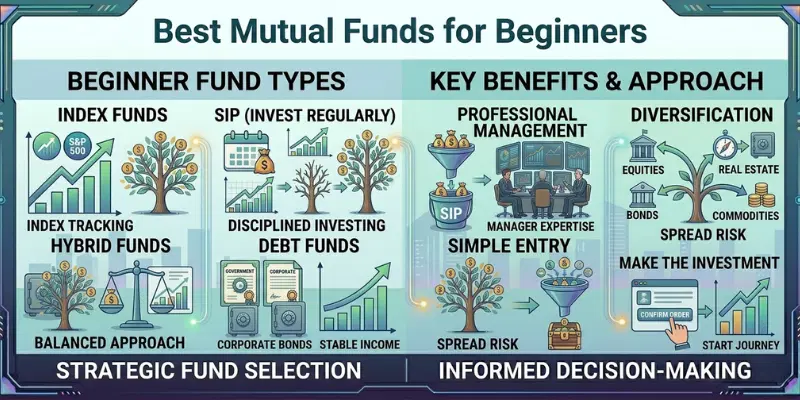
3. Types of Mutual Funds for Beginners
The types of mutual funds are following which are best for beginners:
1. Equity Funds
Equity funds invest in stocks of different companies. They can give higher returns over time. But they also come with higher risk. Prices can go up and down often. This type is better for long-term investors. Beginners should choose carefully and stay patient.
2. Debt Funds
debt funds invest in safer options like bonds and fixed income assets. They offer stable but lower returns. Risk is much lower compared to equity funds. This makes them suitable for beginners. A low cost mutual fund in this category is a safe start. It is good for short-term or low-risk goals.
3. Hybrid Funds
hybrid funds invest in both stocks and safe assets. This gives a mix of growth and stability. Risk is lower than equity funds. Many beginners prefer this balanced approach. These are often among the best mutual funds to invest for new users. They are a good middle option.
4. Index Funds
index funds follow a market index and copy its performance. They are simple and easy to understand. These funds usually have low charges. That is why they are a low cost mutual fund option. They do not need active management. This makes them perfect for beginners.
4. How to Choose the Best Mutual Fund
Choosing the right fund can feel confusing at first. There are many options, and each one looks similar. But you do not need expert knowledge to decide. You only need to follow a few simple steps. When your goal, risk level, and cost are clear, the choice becomes easy. This helps you find the best mutual funds for beginners without stress.
1. Check Your Goal
First, understand why you want to invest. Your goal can be short-term or long-term. If you want quick returns, choose safer options. For long-term growth, you can take more risk. This helps you pick the right fund. A clear goal makes your decision easy.
2. Understand Your Risk Level
Every investment has some risk. You need to know how much risk you can handle. If you are not comfortable with market ups and downs, choose safer funds. If you can wait and stay calm, you can try growth options. A beginner mutual fund should match your comfort level. This avoids stress later.
3. Check Past Performance
Past performance shows how a fund has performed over time. It does not guarantee future returns, but it gives an idea. Look at long-term results instead of short-term gains. Consistency is more important than high returns. This helps you find stable options. Avoid choosing funds based on recent performance only.
4. Check Expense Ratio
Expense ratio is the cost of managing the fund. A high cost reduces your returns over time. So always look for a low cost mutual fund. Lower cost means more profit stays with you. This is very important for long-term investment. Small savings in cost can make a big difference.
5. Use Simple Tools
Use online tools to compare funds easily. Calculators and comparison websites can help you understand better. They show returns, risk, and costs in one place. This makes your decision faster and clearer. Many beginners use these tools to find the best mutual funds for beginners. It saves time and reduces confusion.
5. Best Mutual Fund Categories for Beginners
Choosing the right category is important when you start investing. Not every fund is suitable for beginners. Some options are simple, stable, and easier to manage. These funds help you reduce risk and understand how investing works. You do not need to try everything at once. Starting with the right category can make your journey smooth and stress-free.
1. Index Funds
Index funds are one of the easiest options to start with. They follow a market index and copy its performance. This makes them simple and transparent. They also have low charges, which makes them a low cost mutual fund option. You do not need to track the market daily. This makes them a great beginner mutual fund choice.
2. Large-Cap Funds
Large-cap funds invest in big and well-known companies. These companies are usually stable and less risky. Returns may not be very high, but they are more consistent. This makes them a safe option for beginners. Many people consider them among the best mutual funds to invest when starting. They offer a balance of growth and stability.
3. Balanced (Hybrid) Funds
Balanced funds invest in both stocks and safe assets. This creates a mix of growth and safety. Risk is lower compared to pure equity funds. These funds are suitable for beginners who want a stable start. They help reduce the impact of market ups and downs. This makes them one of the best mutual funds for beginners.
6. Real-Life Example
Let’s understand this with a simple example. Ali wants to start investing but does not have much knowledge. He decides to invest 5,000 every month in a beginner mutual fund. He chooses a low cost mutual fund and plans to stay invested for the long term. At first, the growth looks slow. But after a few years, his investment starts growing faster due to compounding. This shows how small steps can lead to big results over time.
After 10 years, Ali’s total investment becomes much higher than what he put in. He did not try to time the market or take high risk. He simply stayed consistent and patient. This is why many experts suggest the best mutual funds for beginners as a starting point. It helps you grow your money without stress. So ask yourself, are you waiting or ready to take your first step?
7. Tips for Beginners
Starting your investment journey is simple if you follow a few basic tips. First, start as early as possible because time helps your money grow faster. Second, invest regularly instead of waiting for the perfect time. Third, stay invested for the long term and do not panic during market drops. A beginner mutual fund works best when you give it enough time to grow. Small steps taken early can give better results later.
Another important tip is to keep things simple. Do not try to invest in too many options at once. Choose a low cost mutual fund and focus on steady growth. Avoid chasing high returns because they often come with high risk. Instead, aim for balance and consistency. Many people find the best mutual funds to invest by staying patient and disciplined. So ask yourself, are you ready to stay consistent and grow your money over time?
8. Common Mistakes to Avoid
Many beginners make simple mistakes when they start investing. One common mistake is waiting too long to begin. People keep thinking and miss the benefit of time. Another mistake is chasing high returns without understanding risk. This often leads to losses and stress. Some investors also follow others without doing their own research. Choosing a beginner mutual fund without a clear goal can create confusion later.
Another mistake is investing in too many funds at once. This makes it hard to manage and track your money. Some people also panic and withdraw when the market falls. This stops long-term growth. Instead, focus on simple and steady options like a low cost mutual fund. Many investors find the best mutual funds for beginners by staying patient and avoiding these errors. So ask yourself, are you investing smartly or repeating common mistakes?
9. Mutual Funds vs Other Options
Mutual funds are often easier for beginners compared to other options like savings accounts or direct stocks. A savings account is safe but gives very low returns. Stocks can give high returns, but they need knowledge and carry higher risk. Mutual funds offer a balance between these two. They give better returns than savings and are easier to manage than stocks. This is why many people choose the best mutual funds for beginners as a starting point.
Another benefit is that mutual funds are managed by professionals. You do not need to study the market every day. A beginner mutual fund spreads your money across different assets, which reduces risk. A low cost mutual fund also helps you save on extra charges. Compared to other options, this makes investing simple and stress-free. So ask yourself, do you want high effort or a simple way to grow your money?
10. Who Should Invest in Mutual Funds?
Mutual funds are a good choice for people who want a simple way to start investing. Beginners who do not have much market knowledge can use them easily. Salaried individuals can also benefit because they can invest small amounts regularly. These funds are suitable for people who want long-term growth without daily effort. A beginner mutual fund helps you start without confusion. It gives you a clear path to build your savings over time.
Mutual funds are also useful for people who want to reduce risk. Instead of investing in one place, your money is spread across different options. A low cost mutual fund is helpful for those who want to keep expenses low. Many investors choose the best mutual funds to invest when they want steady growth with less stress. So if you want a simple and flexible way to grow your money, this option can be a good fit for you.
You should check if it matches your goal and risk level. Compare its performance with similar funds over time. If it stays consistent, you are on the right track.
This is normal for beginners. Markets move up and down in the short term. Stay calm and focus on long-term growth.
You should not switch quickly without a reason. Check long-term performance before making a change. Small patience often gives better results.
Cost plays a big role in your final returns. A low cost mutual fund helps you keep more profit. Even small fees can reduce returns over time.
Yes, you can choose a mix of funds for balance. But do not overcomplicate it in the beginning. Keep your portfolio simple and easy to manage.
Mutual funds work best over a longer period. Staying invested for a few years helps your money grow better. Time is one of the biggest factors in success.
Start with a small amount to build confidence. Choose a beginner mutual fund that is simple and low risk. Learning by doing is the best way to understand investing.
Conclusion
So guys, in this article, we’ve covered Best Mutual Fund for Beginners in detail. You now have a clear idea of how to start and what to look for. My personal recommendation is to keep things simple and choose a fund that matches your goal and risk level. Do not try to do too much in the beginning. Start small, stay consistent, and give your investment time to grow. Now take the first step and begin your investment journey today.
The information and calculators on Finance Calculatorz are provided for educational purposes only. Calculator results are estimates and may not always be fully accurate. This content is not financial, investment, tax, or legal advice. Please consult a qualified professional before making any financial decision.



- Be Respectful
- Stay Relevant
- Stay Positive
- True Feedback
- Encourage Discussion
- Avoid Spamming
- No Fake News
- Don't Copy-Paste
- No Personal Attacks
- Be Respectful
- Stay Relevant
- Stay Positive
- True Feedback
- Encourage Discussion
- Avoid Spamming
- No Fake News
- Don't Copy-Paste
- No Personal Attacks
