What is Portfolio turnover ratio? How it Works
Published: 27 May 2026
Many mutual funds buy and sell investments regularly. The speed of this activity is measured by the portfolio turnover ratio. It shows how often a fund changes its holdings in a year. This simple number can tell you a lot about a fund’s strategy. But are you paying attention to it?
1. What is Portfolio Turnover Ratio?
The portfolio turnover ratio shows how often a fund buys and sells its investments in a year. It tells you how active the fund manager is. In simple words, it shows how frequently the portfolio changes. This number is usually shown as a percentage. It gives you a quick idea of how much trading happens inside the fund.
For example, a 100% ratio means the fund changed all its holdings once in a year. A 50% ratio means only half of the investments were replaced. You will often see this in portfolio turnover ratio in mutual fund details. Some funds trade more, while others hold for a longer time. This difference can affect both cost and returns, so it is important to understand it clearly.
2. Why Portfolio Turnover Ratio Matters
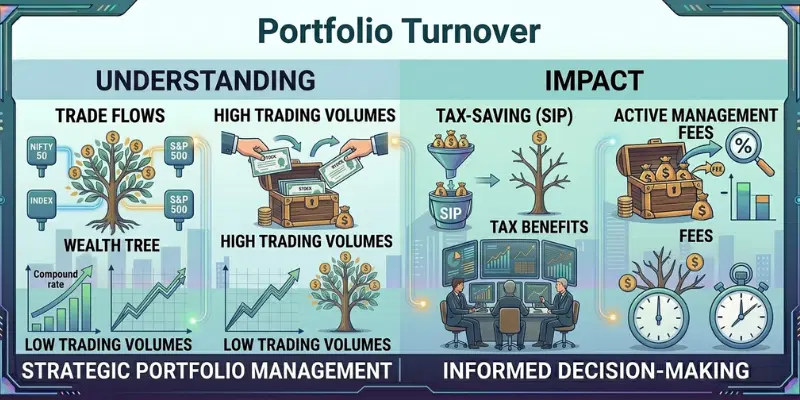
The portfolio turnover ratio is important because it shows how actively a fund is managed. Some funds buy and sell investments very often. Others hold the same investments for a long time. This difference can tell you a lot about the fund’s strategy. A high ratio means the manager is making frequent changes. A low ratio means the manager believes in holding investments for a longer period. Knowing this helps you choose a fund that matches your style.
This ratio also plays a role in your overall returns. When a fund trades more, it creates higher internal costs like brokerage and transaction charges. These costs are not always visible, but they reduce your final profit. In a portfolio turnover ratio in mutual fund, this becomes an important factor for comparison. A fund with very high trading may not always give better results. So, before you invest, ask yourself. Do you want active trading, or do you prefer steady long-term growth?
3. How Portfolio Turnover Ratio Works
The portfolio turnover ratio shows how much of a fund’s holdings are bought and sold over a year. It works by comparing the total value of trades with the average size of the fund, often called AUM. When a fund manager buys new assets or sells old ones, this activity adds to the ratio. The more changes made, the higher the number becomes. This helps you understand how often the fund is reshaped.
Let’s look at a simple example. Suppose a fund has an average AUM of $1 million. During the year, the manager buys or sells assets worth $500,000. This means the turnover ratio is 50%. It shows that half of the portfolio changed in that time. In a portfolio turnover ratio in mutual fund, this number helps you see the level of trading activity clearly.
This ratio keeps changing based on the fund’s strategy. Some funds make frequent moves to take short-term opportunities. Others follow a long-term plan and avoid too much trading. Both approaches can work, but they carry different costs and risks. So, before you invest, ask yourself. Do you understand how active the fund is and why it follows that approach?
4. Portfolio Turnover Ratio Formula (Simple Explanation)
The portfolio turnover ratio formula shows how much a fund buys or sells compared to its average size. The formula is: Portfolio Turnover Ratio = Total value of purchases or sales ÷ Average aum. Here, AUM means the average total value of the fund during the year. Funds usually take the lower value between total purchases or total sales to avoid double counting. This helps give a clear and accurate picture of trading activity.
Let’s understand this with a simple example. Suppose a fund has an average AUM of $1 million. During the year, it buys assets worth $400,000 and sells assets worth $500,000. The lower value is $400,000, so the ratio becomes 40%. This means 40% of the portfolio changed during the year. You do not need to calculate this yourself, as fund reports already show it, but knowing the formula helps you understand what this number really means.
5. High vs Low Portfolio Turnover Ratio
The portfolio turnover ratio can be high or low, and each level tells you something important about the fund. A high ratio means the fund buys and sells investments very often. This shows an active strategy where the manager tries to take advantage of short-term market changes. The fund keeps adjusting its holdings based on new opportunities. This can sometimes lead to better returns, but it also increases trading costs. So, a high ratio shows activity, but it also brings higher expenses.
On the other hand, a low ratio means the fund does not trade much. It follows a long-term strategy and holds investments for a longer period. The manager focuses on steady growth instead of frequent changes. This approach can reduce costs and make the fund more stable. In a portfolio turnover ratio in mutual fund, a low number often reflects patience and consistency. Before you invest, ask yourself a simple question. Do you want a fund that moves quickly, or one that grows steadily over time?
6. Impact on Costs and Returns
The portfolio turnover ratio has a direct impact on the costs inside a fund. When a fund buys and sells investments often, it creates trading expenses. These include brokerage charges, transaction fees, and other small costs. These costs may not be visible to you directly, but they reduce the overall fund value. A higher trading frequency usually means higher internal expenses.
Now think about how this affects your returns. Even if a fund performs well, high costs can reduce your final profit. For example, a fund may earn good returns, but frequent trading eats into those gains. In a portfolio turnover ratio in mutual fund, this becomes an important factor to check. Lower trading activity often means lower costs, which can help improve your net returns.
So, before you invest, look beyond just performance. Ask yourself a simple question. Is the fund earning more, or is it also spending more on trading? Understanding this can help you make a smarter investment decision.
7. What is a Good Turnover Ratio?
There is no single “perfect” number for the portfolio turnover ratio. A good value depends on the type of fund and its strategy. Some funds aim for quick gains and trade often. Others focus on long-term growth and trade less. So, you should not judge a fund by this number alone.
For example, equity funds that follow active strategies may have a higher ratio. index funds and long-term funds usually have a lower ratio. In a portfolio turnover ratio in mutual fund, it is better to compare funds within the same category. This gives you a fair idea of what is normal.
Also think about your own goal. If you prefer stable, long-term growth, a lower ratio may suit you. If you are okay with more activity and possible higher cost, a higher ratio may work. So, before you decide, ask yourself. Does this fund’s strategy match my investment style?
8. How Investors Should Use This Ratio
The portfolio turnover ratio is a useful tool, but you should not use it alone. It helps you understand how active a fund is, but it does not show everything. You should always look at it along with returns, risk, and cost. This gives you a complete picture of the fund.
Start by comparing this ratio between similar funds. For example, compare two equity funds instead of mixing different types. In a portfolio turnover ratio in mutual fund, this helps you see which fund trades more and why. A higher ratio may show an active strategy, while a lower one may show a stable approach.
You should also match this ratio with your investment goal. If you prefer long-term growth, a lower ratio may suit you better. If you are okay with more activity, you can consider a higher ratio. So, before you invest, ask yourself. Does this fund’s trading style match my plan?
9. Real-Life Example
Let’s understand this with a simple example.
Imagine two funds. Fund A has a high portfolio turnover ratio of 120%. This means it changes most of its holdings during the year. The manager buys and sells often to catch short-term opportunities. Because of this, the fund has higher trading costs. It may give good returns in some periods, but the costs can reduce the final profit.
Now look at Fund B. It has a low ratio of 20%. This fund holds its investments for a longer time. The manager follows a steady and long-term approach. Trading costs are lower, and the strategy is more stable. In a portfolio turnover ratio in mutual fund, this difference helps you see how each fund works.
Both funds can perform well, but they follow different styles. Fund A is active and fast-moving. Fund B is calm and long-term focused. So, before you choose, ask yourself. Which style fits your goal better?
10. Common Mistakes Beginners Make
Many beginners ignore the portfolio turnover ratio when they choose a fund. They focus only on past returns and miss how the fund actually works. This can lead to wrong choices. A fund may look strong on paper but may carry high hidden costs due to frequent trading. So, skipping this detail can affect your final returns.
Another common mistake is thinking that a higher ratio always means better performance. Some investors believe more trading leads to higher profit. But this is not always true. Frequent buying and selling can increase costs and reduce gains. In a portfolio turnover ratio in mutual fund, a high number shows activity, not guaranteed success.
Some investors also compare this ratio across different types of funds. This creates confusion and wrong judgment. You should always compare similar funds to get a clear idea. So, before you invest, ask yourself. Am I looking at the full picture or just one number?
11. Tips for Smart Investors
Use the portfolio turnover ratio as a guide, not a final decision. Always check it along with returns, risk, and fees. This gives you a full picture of the fund. A single number cannot tell the whole story.
Compare this ratio within the same category. For example, compare equity funds with equity funds. This helps you see what is normal and what is high or low. In a portfolio turnover ratio in mutual fund, this simple step avoids wrong comparisons.
Think about your goal before you choose a fund. If you want long-term growth, look for a lower trading style. If you are okay with more activity, a higher ratio may suit you. Ask yourself. Does this fund match my plan?
Stay consistent with your investment. Do not switch funds too often based on short-term changes. Frequent switching can increase costs and reduce returns. A steady approach often gives better results over time.
Not always. A high number only shows more buying and selling. Skill depends on how well the fund performs after costs.
Yes, it can. More trading usually means more internal expenses. These costs reduce your final returns over time.
Not always. Some active funds perform well in certain market conditions. But you should check costs and consistency before deciding.
Lower turnover often means fewer trades and lower costs. It also shows a stable and patient strategy. This can help in steady long-term growth.
Yes, it gives a clear hint. A high ratio shows an active approach, while a low one shows a long-term style. This helps you match it with your goal.
In some cases, yes. Frequent trading inside the fund can lead to taxable events. This may affect your overall returns.
You should check it before investing and review it from time to time. Fund strategies can change based on market conditions. Regular checks help you stay informed.
Conclusion
So guys, in this article, we’ve covered Portfolio turnover ratio in detail. You now understand how it shows the activity level of a fund and its impact on costs and returns. My personal recommendation is simple. Do not judge a fund by this number alone. Always check it with performance, risk, and your long-term goal. Want to invest smarter? Start reviewing this ratio before your next investment.
The information and calculators on Finance Calculatorz are provided for educational purposes only. Calculator results are estimates and may not always be fully accurate. This content is not financial, investment, tax, or legal advice. Please consult a qualified professional before making any financial decision.



- Be Respectful
- Stay Relevant
- Stay Positive
- True Feedback
- Encourage Discussion
- Avoid Spamming
- No Fake News
- Don't Copy-Paste
- No Personal Attacks
- Be Respectful
- Stay Relevant
- Stay Positive
- True Feedback
- Encourage Discussion
- Avoid Spamming
- No Fake News
- Don't Copy-Paste
- No Personal Attacks
