What is Small Cap Mutual Funds? Benefits and Risk
Published: 13 Apr 2026
Many small companies have grown into big brands over time. This is why many investors look for the best small cap mutual funds to catch early growth. These funds invest in smaller companies with strong future potential. They can give higher returns, but they also carry more risk. So, understanding how they work is very important before you invest.
1. What Are Small Cap Companies?
Small cap companies are businesses with a relatively small market value. In simple terms, these are companies that are still in their early or growing stage and have not yet reached a large scale. They are usually smaller than well-known brands, but they often have strong potential to grow in the future.
In the stock market, companies are generally divided into three categories: large cap, mid cap, and small cap. Large cap companies are well-established and stable, while mid cap companies are in a growth phase. Small cap companies, on the other hand, are smaller in size but aim to expand quickly. When you invest in small cap mutual funds, your money is spread across a mix of these smaller companies through a managed portfolio.
1. Why Do Small Companies Matter?
Small companies may not be very popular today, but many of them have the ability to grow at a faster rate compared to larger companies. This is one of the main reasons why investors look for the best small cap mutual funds. They want to invest early and benefit from the company’s growth over time.
A simple way to understand this is by thinking about a small local business that slowly becomes a well-known brand. Early investors in such businesses often see higher returns as the company grows. However, this growth is not guaranteed, and that is something every investor should keep in mind.
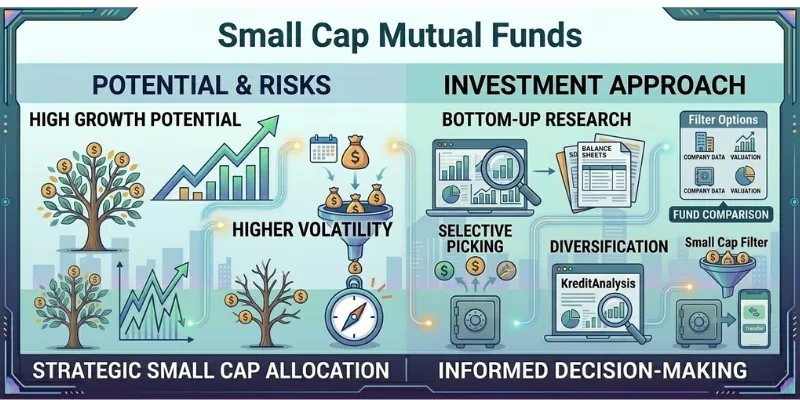
2. Growth vs Stability
Small cap companies usually focus more on growth than stability. This means they may grow faster, but their performance can also change quickly. Their stock prices can go up or down in a short time, especially during market ups and downs.
Because of this, investing in a small cap mf can offer higher return potential, but it also comes with higher risk. This balance between growth and risk is what makes small cap investing both exciting and challenging.
2. How Small Cap Mutual Funds Work?
Small cap mutual funds are mutual funds that invest mainly in smaller companies with high growth potential. Instead of picking stocks yourself, you invest your money in a fund that is managed by a professional. The fund manager selects different small companies and builds a portfolio based on research and growth chances. This helps you avoid the risk of relying on a single company. Many investors explore the best small cap mutual funds to benefit from this expert management and diversified approach.
When you invest in a small cap mf, your money is spread across multiple companies, which helps reduce overall risk. You can invest either through a lump sum or start a sip in small cap funds, where you invest a fixed amount every month. SIP is a simple option for beginners because it spreads investment over time. However, these funds need patience, as small companies take time to grow. Staying invested for the long term can help you see better results.
3. Key Features of Small Cap Mutual Funds
Before you invest, it is important to understand the key features of small cap mutual funds so you can make a better and informed decision.
1. Focus on High Growth Companies
Small cap mutual funds invest mainly in smaller companies that have strong growth potential. These businesses are still expanding, so they can grow faster than large and stable companies. This is why many investors look for the best small cap mutual funds when they want higher return opportunities. However, this growth also depends on how well the company performs over time.
2. Professional Fund Management
These funds are managed by experienced fund managers who study the market and select companies carefully. They analyze business performance, future growth, and risk factors before investing. This helps investors who do not have time or knowledge to pick stocks on their own. A well-managed small cap mf can improve your chances of better returns.
3. Diversification of Investment
One key feature is diversification, where your money is spread across multiple small companies. This reduces the risk of depending on a single company. If one company does not perform well, others may balance the overall result. This makes small cap mutual funds a safer option compared to investing in one small stock.
4. Easy Investment Options
You can invest in these funds in a simple way. You can start with a lump sum or choose a SIP in small cap funds, where you invest a fixed amount every month. SIP is a good option for beginners because it builds discipline and reduces the effect of market ups and downs.
5. Suitable for Long-Term Goals
Small cap mutual funds work best when you stay invested for a longer period. These companies need time to grow, so short-term results may not be stable. If you are patient and can handle some risk, these funds can become a strong part of your investment plan.
4. Why Do People Invest in Small Cap Funds?
Many people invest in small cap mutual funds because they want higher growth compared to traditional options. These funds focus on smaller companies that are still expanding, so they can offer better return potential over time. Investors who are ready to take some risk often explore the best small cap mutual funds to benefit from early-stage growth. It is not about quick profits, but about staying invested and allowing your money to grow gradually. For example, investing in a growing business today can lead to better gains in the future if the company performs well.
People choose these funds for different reasons, depending on their goals and risk level. Here are some common reasons why investors consider a small cap mf:
- Higher return potential compared to large and stable companies
- Opportunity to invest in companies before they become big
- Suitable for long-term wealth creation
- Helps diversify an investment portfolio
- Option to start small through SIP in small cap funds
- Can benefit from market growth over time
- Attractive for investors who can handle risk and volatility
5. Benefits of Small Cap Funds
- High growth potential compared to large companies
- Chance to earn better returns over the long term
- Opportunity to invest early in growing businesses
- Managed by experts who select and track companies
- Diversification reduces risk of a single stock
- sip in small cap mutual funds allows easy monthly investing
- Can help build wealth if you stay invested patiently
6. Risks of Small Cap Funds
- High risk due to unstable company performance
- Prices can go up and down very quickly
- Affected more during market crashes
- Some companies may fail or not grow as expected
- Returns are not guaranteed and can vary widely
- Not suitable for short-term investment goals
- Requires patience and strong risk tolerance
7. Who Should Invest in Small Cap Funds?
Small cap funds are not for everyone. They are best suited for people who understand that higher returns often come with higher risk. These funds invest in smaller companies that can grow fast, but their performance can change quickly. So, before choosing from the best small cap mutual funds, it is important to know if this type of investment matches your goals and comfort level.
Here are the types of investors who can consider a small cap mf:
- Investors who are ready to take higher risk for better returns
- People with long-term goals, usually 5 years or more
- Young investors who have time to stay invested
- Individuals with a stable income who can handle market ups and downs
- Investors who already have safer investments and want to add growth options
- People who prefer investing regularly through SIP in small cap funds
- Those who can stay patient and not panic during market falls
8. Small Cap vs Large Cap Funds
Small cap mutual funds and large cap funds both invest in companies, but they are very different in terms of size, risk, and growth. Small cap mutual funds focus on smaller companies that are still growing, while large cap funds invest in well-established and stable businesses. This difference affects how they perform and what kind of investors they suit. Many investors compare these options before choosing the best small cap mutual funds or safer large cap options.
A simple way to understand this is by looking at growth and stability. Small companies can grow faster, but their performance can change quickly. Large companies usually grow slowly, but they offer more stable returns. So, your choice depends on how much risk you can handle and how long you plan to invest.
Key Differences
- Small cap mutual funds invest in smaller, growing companies, while large cap funds invest in big, established companies
- Small cap mf has higher growth potential, but large cap funds offer more stable returns
- Small cap investments carry higher risk, while large cap funds are considered safer
- Market ups and downs affect small cap mutual funds more compared to large cap funds
- Small cap mutual funds are better for long-term goals, while large cap funds can suit both short and long term
- SIP in small cap mutual funds can help manage risk over time, while large cap SIPs are more stable
- Small cap mutual funds need patience, while large cap funds provide more predictable performance
9. How to Invest in Small Cap Mutual Funds
Investing in small cap mutual funds is simple if you follow a clear process. You do not need deep market knowledge to start. First, choose a trusted mutual fund platform or app where you can explore different options. Then, compare a few funds based on their past performance, fund manager track record, and risk level. Many beginners start with the best small cap mutual funds that have shown consistent growth over time.
You can invest in two ways. One is a lump sum, where you invest a fixed amount at once. The second is a SIP in small cap funds, where you invest a small amount every month. SIP is a better choice for most people because it spreads your investment and reduces the effect of market ups and downs. Once you invest, stay consistent and give your investment enough time to grow.
Simple Steps to Start:
- Choose a reliable investment platform or app
- Select a fund based on performance and risk level
- Decide between lump sum or SIP investment
- Start with an amount you are comfortable with
- Track your investment from time to time
- Stay invested for the long term
- Avoid making quick decisions during market changes
10. Tips Before Investing
Before you invest in a small cap mf, it is important to follow some basic tips. These tips can help you reduce risk and make better decisions over time.
- Do not invest all your money in one type of fund
- Always check the fund’s past performance and consistency
- Start small if you are a beginner
- Be ready for market ups and downs
- Stay patient and avoid panic selling
- Prefer SIP in small cap mutual funds for better balance
- Match your investment with your financial goals
11. Best Small Cap Mutual Funds in India 2026
- Nippon India Small Cap Fund
- HDFC Small Cap Fund
- Axis Small Cap Fund
- SBI Small Cap Fund
- Quant Small Cap Fund
- Bandhan Small Cap Fund
- Invesco India Small cap Fund
12. Best Small Cap Mutual Funds in US 2026
- Fidelity Blue Chip Growth Fund (FBGRX)
- Fidelity Growth Company Fund (FDGRX)
- Fidelity Mega Cap Stock Fund (FGRTX)
- Vanguard 500 Index Fund (VFIAX)
- Dodge & Cox Stock Fund (DODGX)
- T. Rowe Price Equity Index 500 Fund (PREIX)
- Schwab Fundamental US Large Company Index Fund (SFLNX)
- Fidelity 500 Index Fund
You should first check your risk level and investment goal. If you are comfortable with ups and downs and can stay invested for a long time, it may suit you. Many investors review the best small cap mutual funds to match their goals before starting.
You can begin with a small amount instead of investing a large sum at once. Starting a SIP in small cap funds helps you invest regularly and manage market changes. This approach also builds discipline over time.
These funds invest in smaller companies, which are still growing and not fully stable. Their performance can change quickly due to market conditions or business results. This is why a small cap mf can give high returns but also show sudden drops.
Small cap funds need time because the companies take time to grow. Most investors stay invested for at least 5 to 7 years. Staying patient helps balance short-term ups and downs.
Avoid investing all your money in one fund or reacting quickly to market drops. Do not expect fast profits in a short time. Instead, stay consistent and focus on long-term growth.
Look at the fund’s past performance, fund manager experience, and risk level. Compare a few options instead of picking randomly. This helps you choose from the best small cap mutual funds more wisely.
For most beginners, investing regularly is a safer option. A SIP in small cap funds spreads your investment over time and reduces risk. It also makes investing easier to manage with a fixed monthly amount.
Conclusion
So guys, in this article, we’ve covered Small cap mutual funds in detail. These funds can be a strong option if you are looking for higher growth and are ready to handle some risk. In my opinion, beginners should start small and consider a SIP in small cap funds to manage market ups and downs. If you stay patient and invest with a clear plan, these funds can help build long-term wealth. Now take a step forward, review your options, and start your investment journey today.
The content on Finance Calculatorz is intended for educational and informational purposes. It provides general guidance on financial topics and tools. Readers are encouraged to use theinformation to make informed decisions about their finances.






- Be Respectful
- Stay Relevant
- Stay Positive
- True Feedback
- Encourage Discussion
- Avoid Spamming
- No Fake News
- Don't Copy-Paste
- No Personal Attacks
- Be Respectful
- Stay Relevant
- Stay Positive
- True Feedback
- Encourage Discussion
- Avoid Spamming
- No Fake News
- Don't Copy-Paste
- No Personal Attacks
