Tips to protect yourself from investment scams
Published: 22 Feb 2026
Every year, millions of people lose their hard-earned money to investment fraud. Scammers use social media, fake apps, and even trusted-looking websites to trap innocent investors. That’s why learning How to Keep Yourself Safe from Investment Scams is no longer optional, it is necessary for protecting your financial future.
1. Common Types of Investment Scams
Not all investment scams look the same. Some appear professional. Others look simple and harmless. But the goal is always the same, take your money.
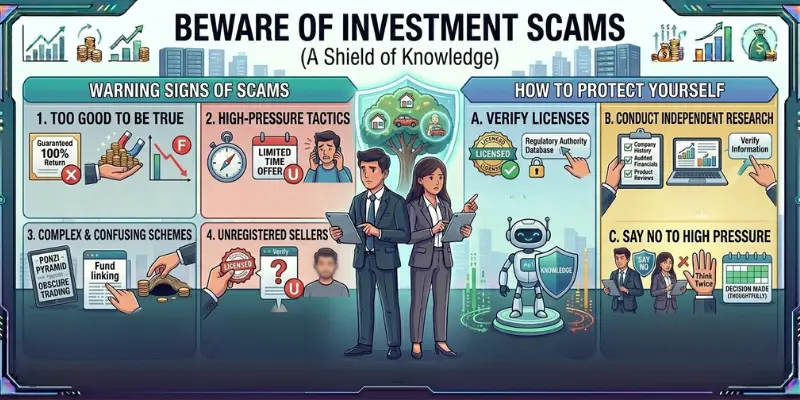
Here are the most common types you should know.
1. Ponzi Scheme
A Ponzi scheme pays old investors using money from new investors. There is no real business or profit generation behind it.
In the beginning, early investors may receive returns. This builds trust and attracts more people. But once new investments slow down, the scheme collapses.
2. Pyramid Scheme
A pyramid scheme focuses on recruiting people instead of selling a real product. You earn money by bringing new members into the system.
At first, income may seem possible. But when recruitment stops, the entire structure falls apart. Most people at the bottom lose money.
3. Fast Money Schemes
These schemes promise quick daily or weekly returns. You may hear claims like:
- “Double your money in 10 days.”
- “Earn ₹5,000 daily without work.”
Real investing does not work like this. Fast money promises are one of the biggest red flags.
4. Fake Trading Apps
Some scammers create fake investment apps or websites. They show growing profits on your dashboard.
But when you try to withdraw money, your account gets blocked. The profits were never real.
5. Crypto and Forex Scams
Scammers misuse the popularity of cryptocurrency and forex trading. They promise guaranteed returns from “secret strategies.”
Legitimate markets always carry risk. No one can guarantee fixed profits in crypto or forex.
6. Impersonation Scams
Fraudsters pretend to be bank officers, financial advisors, or government representatives. They use official-looking emails and documents.
Their aim is to gain trust quickly and convince you to invest.
2. Warning Signs of Investment Fraud
Most scams give warning signals. The problem is, many people ignore them because the offer looks attractive. If you learn to spot these red flags early, you can protect your hard-earned money.
Here are the most common warning signs.
1. Guaranteed High Returns
No real investment can guarantee fixed profits. Markets go up and down. Even experienced investors face losses. If someone promises “100% guaranteed returns,” that is a major red flag.
2. No Risk Claims
Every investment carries some level of risk. If a person says, “There is zero risk,” they are either lying or hiding the truth. High returns always come with high risk.
3. Pressure to Invest Quickly
Scammers create urgency. They may say:
- “Offer ends tonight.”
- “Limited seats available.”
- “Invest now or miss out.”
This pressure stops you from researching properly.
4. Focus on Recruitment Instead of Product
This is common in pyramid schemes. If earning money depends mainly on bringing new members instead of selling a real product or service, be careful. Sustainable businesses do not depend only on recruitment.
5. Lack of Proper Registration
Legitimate companies are usually registered and regulated. If you cannot verify company details, license information, or office address, do not invest. Transparency builds trust. Secrecy builds risk.
6. “Fast Money” Marketing Language
Be careful with phrases like:
- “Double your money”
- “Passive income without effort”
- “Become rich quickly”
Building wealth takes time. Fast money promises often lead to fast losses.
3. How to Protect Yourself from Investment Scams
Understanding scams is important, but prevention is what truly protects your money. You do not need advanced financial knowledge to stay safe. You only need discipline, awareness, and a few smart habits.
Let’s look at practical steps you can apply immediately.
1. Do Proper Research Before Investing
Never invest just because someone sounds confident or shows profit screenshots. Take time to check whether the company is legally registered and regulated. Search the company name online along with words like “review,” “complaint,” or “fraud” to see real feedback from other investors.
If basic information like office address, registration number, or leadership details is missing, consider that a serious warning sign. A genuine business does not hide its identity.
2. Understand How the Investment Works
Before investing, ask a simple question: how does this company generate profit? If the explanation is unclear, overly technical, or focused only on recruitment, you should step back. Real investments have a clear business model, not just attractive promises.
If you cannot explain the investment in simple words, you probably should not invest in it.
3. Control Your Emotions
Scammers rely heavily on emotional triggers such as urgency, greed, and fear of missing out. They may push you to decide quickly by saying the offer is limited or exclusive. This pressure is designed to stop you from thinking logically.
Make it a rule to wait at least 24 hours before investing in any new opportunity. Time reduces emotional decisions.
4. Protect Your Personal and Financial Information
Never share sensitive details such as OTPs, passwords, or full banking information with anyone. Legitimate financial institutions do not ask for confidential details over random calls or messages. Once you share such information, recovering money becomes very difficult.
Your personal data is as valuable as your money, so protect it carefully.
5. Start Small and Test the Process
If you are trying a new investment platform, begin with a small amount instead of investing a large sum immediately. Test the withdrawal process early to see whether you can access your funds without difficulty. Many scams allow deposits easily but create problems during withdrawals.
If withdrawing money feels complicated, stop investing further.
6. Take a Second Opinion
Before committing your savings, discuss the opportunity with someone experienced or financially aware. A trusted friend, mentor, or financial advisor can often identify red flags that you might miss. An external perspective reduces emotional bias and increases rational thinking.
Seeking advice is not weakness; it is smart financial behavior.
4. What to Do If You Become a Victim
First, stay calm. Panicking will not solve the problem, but acting quickly can reduce further damage. Many people feel ashamed after being scammed, but remember that scammers are professionals who manipulate emotions and trust.
Here is what you should do immediately.
1. Stop All Payments Immediately
If you realize you have been scammed, stop sending any more money right away. Do not believe promises like “Pay one more fee to release your profit.” This is a common tactic used to extract even more money from victims.
Cut communication if necessary and avoid engaging in emotional arguments with the scammer.
2. Inform Your Bank or Payment Provider
Contact your bank as soon as possible and explain the situation clearly. Ask them to block transactions, freeze your account if needed, or attempt a chargeback if the payment was recent. The faster you act, the higher the chance of limiting your loss.
If you used a credit card or online wallet, inform that platform immediately as well.
3. Report to Cyber Crime Authorities
Reporting the fraud is important, even if you think the money cannot be recovered. File a complaint with your country’s cyber crime department or financial fraud authority. This helps track scammers and may prevent others from becoming victims.
Keep all details ready, including transaction records and communication screenshots.
4. Save All Evidence
Do not delete messages, emails, receipts, or transaction details. These documents may help banks or authorities investigate the case. Even small details such as phone numbers or website links can be useful.
Proper documentation strengthens your complaint.
5. Learn and Educate Others
Once the situation is handled, take it as a learning experience rather than a permanent loss. Analyze what warning signs you missed and use that knowledge in the future. Sharing your experience with friends and family can protect them from similar scams.
Sometimes one honest conversation can save someone else’s life savings.
Start by checking if the offer promises guaranteed or very high returns. Then verify whether the company is registered and transparent about its business model. If you feel pressure to invest quickly, that is usually a warning sign.
Not every opportunity is fake, but most fast money promises are risky or misleading. Real investing usually takes time and patience. If profits sound unrealistic, you should be careful.
Check its official registration and regulatory approval. Search online reviews along with words like “complaint” or “fraud.” If basic information is missing or unclear, avoid investing.
Take a step back and do not decide under pressure. Legitimate investments allow you time to think and research. Waiting 24 hours can help you avoid emotional mistakes.
Recovery depends on how quickly you act. Contact your bank and report the fraud immediately to increase your chances. Even if recovery is not guaranteed, reporting helps prevent further damage.
Scammers use emotional triggers like greed and fear of missing out. They create urgency and show fake proof to build trust. Even intelligent people can make mistakes under emotional pressure.
Conclusion
So guys, in this article, we’ve covered How to Keep Yourself Safe from Investment Scams in detail. You now understand the warning signs, common scam types, and the steps you can take to protect your hard-earned money. My personal recommendation is simple: never rush into any investment that promises fast money or guaranteed returns, no matter how attractive it looks. Take your time, verify every detail, and make informed decisions. If you found this guide helpful, share it with someone who needs to protect their savings today.
The information and calculators on Finance Calculatorz are provided for educational purposes only. Calculator results are estimates and may not always be fully accurate. This content is not financial, investment, tax, or legal advice. Please consult a qualified professional before making any financial decision.


- Be Respectful
- Stay Relevant
- Stay Positive
- True Feedback
- Encourage Discussion
- Avoid Spamming
- No Fake News
- Don't Copy-Paste
- No Personal Attacks
- Be Respectful
- Stay Relevant
- Stay Positive
- True Feedback
- Encourage Discussion
- Avoid Spamming
- No Fake News
- Don't Copy-Paste
- No Personal Attacks
