What are Index Funds? Pros and Cons
Published: 20 Mar 2026
Many experts say most investors fail to beat the market over time. Studies show that simple market-tracking investments often perform better than expensive strategies. This is where Index Funds become powerful. They help you invest in the whole market at a low cost. Let’s understand how they work and why beginners love Index Funds.
1. What are Index Funds?
Index Funds are investment funds that track a specific market index. They invest in the same companies included in that index. They do not try to beat the market. They simply follow its performance. This makes them a simple and low-cost option for long-term investors.
For example:
- S&P 500 tracks 500 large companies in the United States.
- Nifty 50 tracks 50 major companies in India.
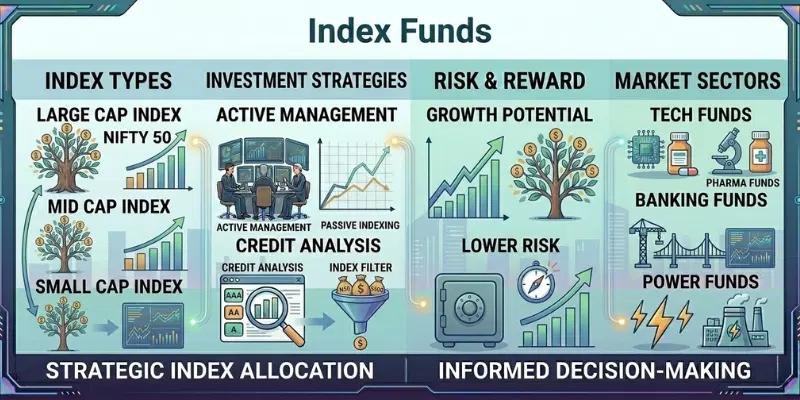
2. How Do Index Funds Work?
Index Funds work in a very simple way. They follow a specific market index and copy its structure. The fund buys the same companies that are part of the index. It also invests in the same proportion. If a company has a higher weight in the index, the fund puts more money into that company. This helps the fund match the performance of the market.
For example, if a fund tracks the S&P 500, it invests in those 500 companies. When most of those companies grow, the fund value increases. When they fall, the fund also falls. The goal is not to beat the market. The goal is to move with it. This approach keeps investing simple and transparent.
Index Mutual Funds follow what experts call passive investing. Passive means the fund manager does not try to pick winning stocks every day. The manager only updates the portfolio when the index changes. This reduces research costs and trading costs. Lower costs mean investors keep more of their returns.
Think about it like this. Instead of trying to choose the best single shop in a big city, you own a small part of every big shop. You reduce the risk of choosing the wrong one. That is how Index Pooled investing works. It spreads risk, keeps costs low, and focuses on long-term growth.
3. Who Should Invest in Index Funds?
Index Funds suit investors who want simple and steady growth. They work best for people who do not want to take high risk or spend hours studying the market. This approach focuses on long-term results instead of quick profits.
Let’s see who can benefit the most.
1. Beginners
If you are new to investing, this option keeps things easy. You do not need to pick individual stocks. You simply follow the market.
Why it suits beginners:
- Simple to understand
- No need for deep research
- Lower risk than single stocks
For example, instead of guessing which company will grow, you invest in many companies at once.
2. Long-Term Investors
Index-based investments reward patience. They work better when you stay invested for many years.
Good for goals like:
- Retirement planning
- Children’s education
- Wealth building
If you stay invested for 10–15 years, market growth and compounding can help your money grow steadily.
3. Busy Professionals
Do you have a full-time job? No time to track daily market news? Then Index Mutual Funds can help.
Benefits for busy people:
- No daily monitoring
- Less stress
- Automatic growth with the market
You invest once and review occasionally. That’s it.
4. Cost-Conscious Investors
Fees matter. High charges reduce long-term returns. Index Pooled investments usually have lower costs.
Why low cost is powerful:
- You keep more profit
- Small savings grow big over time
- Better long-term wealth creation
4. Factors to Consider Before Investing in Index Funds
Before investing in Index Funds, you should pause and think carefully. Even though these funds are simple and low cost, they still involve market risk. A smart investor always checks key factors before putting money into any investment. This helps you avoid emotional decisions and long-term mistakes.
1. Risk Tolerance
Every investment carries risk, and Index Mutual Funds are no exception. Since they follow the market, their value rises and falls with it. You must ask yourself an honest question: Can I handle temporary losses without panic selling? If a 10% drop makes you nervous, start with a smaller amount and increase gradually as you gain confidence.
2. Investment Time Horizon
Time plays a major role in market investing. These funds can move up and down in the short term. In some years, you may see losses. But over longer periods, markets usually grow. If you can stay invested for at least five to ten years, you increase your chances of steady growth. Patience is very important here.
3. Your Investment Goal
First, define your goal clearly. You must know why you are investing. Are you planning for retirement, your child’s education, or long-term wealth building? Index-based investments work best for long-term financial goals. They are not suitable if you need money within one or two years. When your goal is clear, your investment decision becomes easier and more focused.
4. Expense Ratio
Cost matters more than most people think. Even a small difference in fees can reduce your returns over time. One reason investors prefer Index Pooled strategies is their lower cost compared to actively managed funds. Lower fees mean more money stays invested and grows for you in the long run. Always compare expense ratios before making a choice.
5. The Index Being Tracked
Not all index-based funds track the same companies. Some focus on large companies, while others track specific sectors or regions. For example, a fund tracking the S&P 500 invests in 500 major US companies. You must check whether the index matches your financial goal and risk level. A well-diversified index usually offers more stability.
5. Benefits of Index Funds
Index Funds are popular because they offer simple and practical advantages. They help investors grow wealth without complicated strategies. Let’s understand the key benefits clearly.
1. Low Cost
Index Funds usually have lower fees than actively managed funds. Since they simply track a market index, they do not require expensive research teams. This reduces operating costs. Lower cost means more of your money stays invested and grows over time.
For example, if you invest for 15 years, even a 1% higher fee can reduce your final returns significantly. Choosing low-cost Index mutual funds helps protect your long-term gains.
2. Diversification
Diversification means spreading your money across many companies. Instead of depending on one company, you invest in a group of companies at once.
For example, a fund tracking the S&P 500 gives exposure to 500 major companies. If one company performs poorly, others may balance it. This reduces overall risk.
3. Simplicity
Index-based investments are easy to understand. They follow a clear rule: copy the index. There is no complex decision-making process.
You do not need to study balance sheets daily. You invest and allow the market to work over time. This simplicity makes them ideal for beginners.
4. Lower Emotional Stress
Stock picking often creates stress. Prices move daily, and news can cause panic.
With an Index Pooled approach, you focus on the overall market instead of individual companies. This reduces emotional decisions. You stay invested with a long-term mindset.
5. Consistent Market Returns
Index Funds aim to match market returns, not beat them. While they may not deliver extraordinary gains in one year, they offer steady performance over long periods.
Markets have historically grown over time. When you stay invested patiently, compounding helps your money grow steadily.
6. Types of Index Funds
Not all Index Funds are the same. They differ based on the market or sector they track.
1. Broad Market Index Funds
These funds track a large part of the overall market. They include companies from different sectors. This provides strong diversification and balanced risk.
They are suitable for beginners who want wide exposure.
2. Large-Cap Index Funds
These focus on large and stable companies. They usually offer moderate growth with lower volatility compared to small companies.
They are good for investors who prefer stability.
3. Sector Index Funds
These track specific sectors like banking, technology, or healthcare. They can provide higher growth if that sector performs well. However, they also carry higher risk because they depend on one industry.
Choose these only if you understand sector risk.
4. International Index Funds
These invest in companies outside your home country. They help diversify across global markets. This reduces dependence on one economy.
They are useful for investors who want global exposure.
5. Exchange-Traded Index Funds
Some index-based investments trade on stock exchanges. These are called Exchange-Traded Fund. You can buy and sell them during market hours like stocks.
They offer flexibility and liquidity for investors.
7. How to Start Investing in Index Funds
Starting with Index Funds is easier than most people think. You do not need deep market knowledge or a large amount of money. You only need a clear goal, the right platform, and patience. When you follow a simple process, investing becomes less confusing and more disciplined.
1. Define Your Financial Goal
Before you invest, be clear about your purpose. Are you building a retirement fund? Saving for your child’s education? Planning long-term wealth? Index-based investments work best when your goal is at least five to ten years away. A clear goal helps you stay focused during market ups and downs.
2. Open an Investment Account
To invest, you need a brokerage account or a mutual fund platform. Most banks and online apps make this process simple. If you prefer a traditional approach, you can invest through Index Mutual Funds. If you want flexibility to buy and sell during market hours, you can choose an Exchange-Traded Fund. Always choose a trusted and regulated platform for safety.
3. Choose the Right Fund
Not all index funds track the same companies. Some focus on large companies, while others cover the full market. For example, a fund tracking the S&P 500 invests in 500 major US companies. Before selecting a fund, check its expense ratio, diversification level, and the index it follows. Lower costs and broad diversification usually suit beginners better.
4. Decide How Much to Invest
You do not need a huge amount to begin. Start with an amount that fits your budget. You can invest a lump sum or invest monthly through a disciplined plan. For example, investing a fixed amount every month builds consistency and reduces emotional decisions. Small regular investments can grow significantly over time due to compounding.
5. Stay Invested and Be Patient
After investing, avoid checking prices every day. Markets move up and down in the short term. That is normal behavior. Long-term investors focus on staying consistent rather than reacting to temporary market drops. If the market falls for a few months, remind yourself of your long-term goal instead of panicking.
It is hard to perfectly time the market. Many investors focus on long-term investing instead of waiting for the perfect moment. Starting early and staying consistent often matters more than timing.
They follow a passive strategy. Fund managers do not actively pick stocks daily. This reduces management and research expenses.
Yes, you can invest a fixed amount every month. This builds discipline and reduces emotional decisions. Regular investing also helps during market ups and downs.
No market investment gives guaranteed returns. Index-based investments move with the market. Over long periods, markets have historically shown growth.
If you want quick profits in a short time, this may not suit you. These funds work best for patient, long-term investors. Short-term traders may prefer other strategies.
Look at your goal and risk level first. For example, a fund tracking the S&P 500 focuses on large US companies. Choose an index that matches your financial plan and comfort level.
Conclusion
So guys, in this article, we’ve covered Index Funds in detail. You now understand how they work, their benefits, and who should invest in them. In my opinion, if you are a beginner or long-term investor, this simple and low-cost strategy can be a smart starting point. It removes stress and builds discipline. Start small, stay consistent, and let time grow your money. Take your first step today and begin your investing journey with confidence.
The information and calculators on Finance Calculatorz are provided for educational purposes only. Calculator results are estimates and may not always be fully accurate. This content is not financial, investment, tax, or legal advice. Please consult a qualified professional before making any financial decision.


- Be Respectful
- Stay Relevant
- Stay Positive
- True Feedback
- Encourage Discussion
- Avoid Spamming
- No Fake News
- Don't Copy-Paste
- No Personal Attacks
- Be Respectful
- Stay Relevant
- Stay Positive
- True Feedback
- Encourage Discussion
- Avoid Spamming
- No Fake News
- Don't Copy-Paste
- No Personal Attacks
