What is Debt Funds? Pros and Cons of it
Published: 15 Mar 2026
Do you want to earn more interest than a savings account offers? But maybe the stock market feels too risky. You want something steady. Something predictable. Many people feel this way. They want their money to grow, but they do not want to worry about big ups and downs.
This is where debt funds come in. They offer a middle ground. They are safer than stock fund but usually pay more than a bank account.
In this guide, you will learn:
- What a debt fund really is.
- How these fund earn money.
- The benefits and the risks.
- How to choose the right one.
Let us break it down in simple terms.
1. What is a Debt Fund?
Imagine a friend needs to borrow $100. They promise to pay you back in one year. To say thank you, they will also pay you $5 extra. You are acting like a bank. You lend money, and you get paid interest for doing it.
Debt fund work the same way.
You are not buying ownership in a company like you do with stocks. Instead, you are lending money. The fund managers take your money and lend it out. They lend to big companies, to governments, and to other organizations.
These borrowers promise to pay the money back on a set date. They also promise to pay interest along the way.
So, when you put money into debt funds, you become a lender. You earn income from all the interest payments.
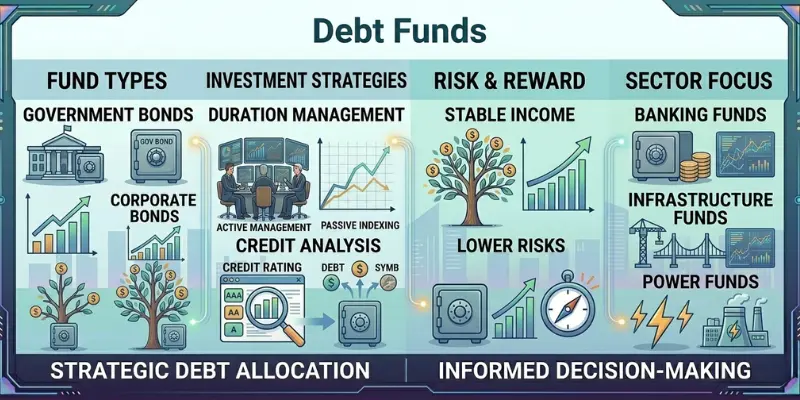
2. How Do Debt Funds Make You Money?
This is the most important part. How does lending money put cash in your pocket? There are two main ways.
1. You Earn Interest Payments
This is the main way debt fund make money. Remember the friend who borrowed $100 and paid $5 extra? That $5 is interest.
Now imagine a debt pooled fund that lends money to:
- A big company like Ford.
- The federal government.
- A city that needs to build a school.
All of these borrowers pay interest on the money they borrow. The fund collects all these interest payments. Then, the fund passes that income along to you. You usually receive a small payment every month. It is like being the bank, but without having to open a bank building.
2. The Value of Your Shares Can Change
The price of debt mutual fund can go up or down a little bit. This happens based on interest rates in the wider economy. Here is a simple way to think about it.
Example: The Interest Rate Shift
Imagine you buy a fund that holds bonds paying 3% interest. That is a good rate. Then, one year later, the government lowers interest rates. New bonds now only pay 1.5% interest.
Your fund’s bonds are now more valuable because they pay higher interest than anything new. People will pay more to buy your fund. So, the share price goes up a little.
The opposite can also happen. If new bonds start paying 5%, your 3% bonds are less attractive. The price of your fund might go down a little.
But remember, if you hold the fund for a long time, you still get your original money back at the end.
3. Pros of Debt Funds
Why do millions of investors use debt funds instead of bank accounts or stocks? There are several good reasons.
1. They Are Safer Than Stocks
Debt fund do not jump up and down like stock fund. The price moves slowly. This makes them a good choice for people who do not like stress.
If you check your account, you will not see huge swings. You will see small, steady changes. For many people, this peace of mind is worth a lot.
2. They Pay Regular Income
Most debt mutual fund pay out interest every month. This is great for people who want steady cash.
Retirees often use these funds to help pay their bills. The monthly payments act like a paycheck. If you are still working, you can also reinvest that cash to buy more shares.
3. They Pay More Than Savings Accounts
Banks usually pay very low interest on savings accounts. Right now, many pay less than 1%.
Debt funds often pay more than bank accounts. You take on a tiny bit more risk, but you get a better return. It is a good trade-off for many people.
4. You Can Choose Your Time Frame
Different debt funds invest in bonds that mature at different times. “Mature” just means the loan is due to be paid back.
- Short-term funds lend money for a few months or a couple of years.
- Long-term funds lend money for many years.
You can pick a fund that matches when you need your money back. If you need the cash in two years, you choose a short-term fund.
4. Cons of Debt Funds
Debt fund are safer than stocks, but they are not 100% risk-free. You need to know the risks before you invest.
1. Interest Rate Risk
We talked about this earlier. When interest rates go up, the value of existing bonds goes down.
This means the price of your debt pooled fund might drop for a while. If you sell right then, you could lose a small amount of your original money.
But if you hold on, the fund will eventually recover as the old bonds are paid off and replaced with new, higher-paying ones.
2. Credit Risk
This is the risk that the borrower does not pay you back.
Most debt funds invest in very safe borrowers, like the government. The government always pays its debts. But some funds lend to companies that are less stable. If that company goes bankrupt, the fund might lose money.
Funds that lend to riskier companies pay higher interest. This is called a “high-yield” fund. You get more income, but you take on more risk.
3. Inflation Risk
Inflation is when prices go up over time. A soda that cost $1 last year might cost $1.05 this year.
If your debt mutual fund pays 3% interest, but inflation is 4%, your money is actually losing buying power. This is a risk with all safe investments. You cannot avoid it completely, but you can balance it by also owning some stock fund for growth.
5. Types of Debt Funds
Not all debt funds are the same. They invest in different kinds of loans. Here are the most common types.
1. Liquid Funds
These are the safest type. They lend money for very short periods, like a few days or weeks. They are almost as safe as a savings account but often pay a little more.
These are good for money you might need in a few months.
2. Short-Term Funds
These funds lend money for one to three years. They pay a bit more than liquid funds. The price moves a little more, but not much.
These are good for money you need in one to three years.
3. Corporate Bond Funds
These funds lend money to big companies. They pay more than government funds because there is a tiny bit more risk.
These are good for people who want higher income and are okay with small price changes.
4. Gilt Funds
These funds only lend to the government. They are very safe because the government is very unlikely to fail to pay.
These are good for people who want maximum safety.
5. Dynamic Bond Funds
These funds move money around based on what the manager thinks interest rates will do. They try to buy bonds at the best times.
These are more complex and better for people who understand interest rates.
6. How to Buy Your First Debt Fund
Buying a debt fund is very simple. It is just like buying an equity fund.
Step 1: Open an Account
You need a brokerage account or a mutual fund account. You can open one online with companies like Vanguard, Fidelity, or Charles Schwab.
If you are investing in a retirement account, you can buy debt mutual fund inside that account too.
Step 2: Pick a Fund
For a beginner, a short-term bond fund or a liquid fund is a great place to start. These are simple and do not have big price swings.
Look for funds with low fees. The fees are called “expense ratios.” Lower fees mean more money stays in your pocket.
Step 3: Decide How Much
You can start with a small amount. Many funds let you begin with $100 or less.
You can buy a set number of shares, or you can set up automatic investments to buy a little bit every month.
Step 4: Understand the Payments
Most debt fund pay interest every month. You will see these payments show up in your account. You can choose to take the cash or reinvest it to buy more shares.
7. Who Should Use Debt Funds?
Debt fund are not for everyone. They work best for certain situations.
- If you are saving for a short-term goal. Buying a house in three years? A short-term debt fund is a good choice.
- If you are retired. You need steady income without big risks. These funds provide that.
- If you want balance. Many investors put some money in stocks and some in debt funds to lower their overall risk.
- If you are scared of the stock market. If stocks keep you up at night, debt funds offer a calmer way to earn more than a bank account.
8. Tips for Success
Here are a few tips to help you get started.
- Match the time frame. If you need the money in one year, do not buy a long-term fund. Choose a short-term or liquid fund.
- Check the credit quality. Look for fund that invest in high-quality borrowers. These are called “investment grade” funds. They are safer.
- Keep costs low. Fees eat into your returns. Look for funds with low expense ratios.
- Reinvest your income. If you do not need the cash now, reinvest it. This helps your money grow faster over time.
Yes, it is possible but not common. If interest rates rise quickly, the value of your fund can drop a little. If you sell right then, you could get back less than you put in. But if you hold on, the fund usually recovers. The risk is much smaller than with stock funds.
It depends on what you want. Fixed deposits from a bank are guaranteed. You know exactly what you will get. Debt funds are not guaranteed, but they often pay more interest. They also let you take your money out anytime without paying a penalty. Fixed deposits charge a penalty for early withdrawal.
Most debt mutual funds pay interest every month. The payment shows up in your account, and you can use it or reinvest it. Some funds pay less often, so always check the fund details before you buy.
Yes, you do. The interest payments you receive are taxable income. If you sell your shares for a profit, that gain is also taxable. The tax rate depends on how long you held the fund. A retirement account like an IRA can help you delay or avoid these taxes.
Liquid and gilt funds are the safest. Liquid funds lend money for just a few days or weeks. Gilt funds only lend to the government. Both have very low risk. They are good choices for beginners or for money you cannot afford to lose.
Yes, you can sell your shares and get your cash any day the market is open. This is called liquidity. The money usually shows up in your bank account in one or two days. There is no penalty for taking it out early, unlike with a bank fixed deposit.
Start with your time frame. When will you need the money? If it is less than one year, pick a liquid fund. If it is one to three years, pick a short-term fund. Then look at fees. Choose the fund with the lowest expenses. This simple method works well for most beginners.
Conclusion
Debt funds are a simple tool for earning more than a bank account without taking big risks. They work by lending your money to governments and companies who pay you interest.
Remember the key points:
- You are a lender, not an owner.
- You earn money from interest payments.
- The price moves slowly, not like stocks.
- Different funds match different time frames.
These funds are perfect for short-term goals or for balancing out riskier stock investments. They give you steady income and peace of mind.
The information and calculators on Finance Calculatorz are provided for educational purposes only. Calculator results are estimates and may not always be fully accurate. This content is not financial, investment, tax, or legal advice. Please consult a qualified professional before making any financial decision.


- Be Respectful
- Stay Relevant
- Stay Positive
- True Feedback
- Encourage Discussion
- Avoid Spamming
- No Fake News
- Don't Copy-Paste
- No Personal Attacks
- Be Respectful
- Stay Relevant
- Stay Positive
- True Feedback
- Encourage Discussion
- Avoid Spamming
- No Fake News
- Don't Copy-Paste
- No Personal Attacks
